“Memories are either comfort and joy or grief and sorrow.”
“No, they are both, and at this time of year, they are everything,” Erma chimes in.
“Not everything, Erma. I don’t need them to be everything today. Comfort and joy will fit the bill just fine. A little bit of kindling or better yet the spark to ignite comfort and joy,” Sylvia offers in a peaceful, yearning tone.
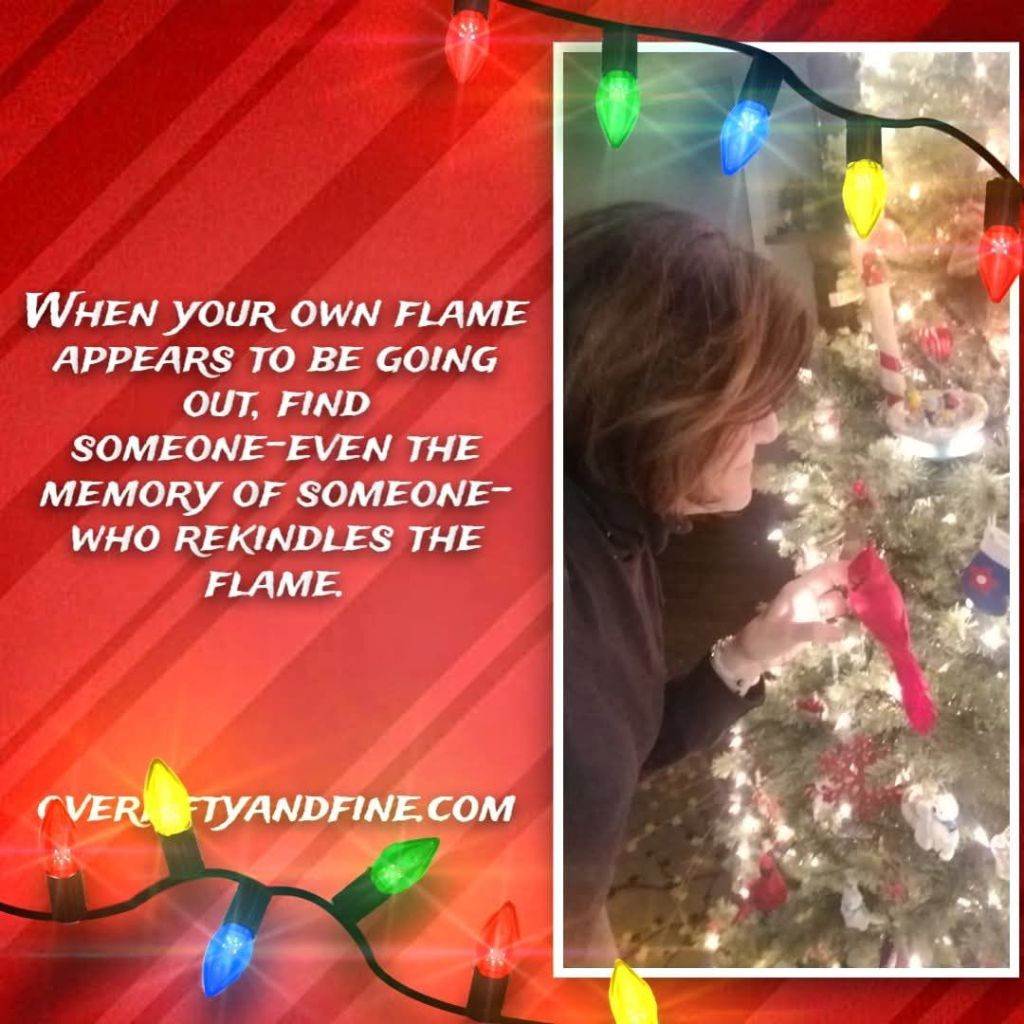
Oh, tidings of comfort and joy! **************** At times our own light goes out and is rekindled by a spark from another person. Each of us has cause to think with deep gratitude of those who have lighted the flame within us. ~Albert Schweitzer ****************
All day yesterday, I thought about my father and the unexpected nature of life. As he declined cognitively due to Alzheimer’s, my days seemed to pass too quickly, and there was never enough time with him. As I became more conscious of the limitations and deadlines imposed by his illness and by what it means to live this one mortal life, moments grew longer and more meaningful. Just a moment. A split second. A smile. A laugh. A tear. A memory. My recall now of those moments tends to be in slow motion. Thankfully. I’ve learned that when I become acutely aware of how fleeting life is, I have the power to slow down and take in the present moment.
Not all experiences are meant to become deeply embedded in the memory, but those times when I’m happiest – and right now that means the days, hours, and minutes when I want nothing but peace and I find it and feel it simply – become the salve I need to soothe my soul. The anticipation of meeting up with a new “old” friend (and the resulting pep in my step). Heading out for coffee in a newly discovered café. Sitting and swinging in an unknown spot. All in slow motion the past few days. I remember all of it vividly…today. And maybe, just maybe, that’s all there is, but it is enough.
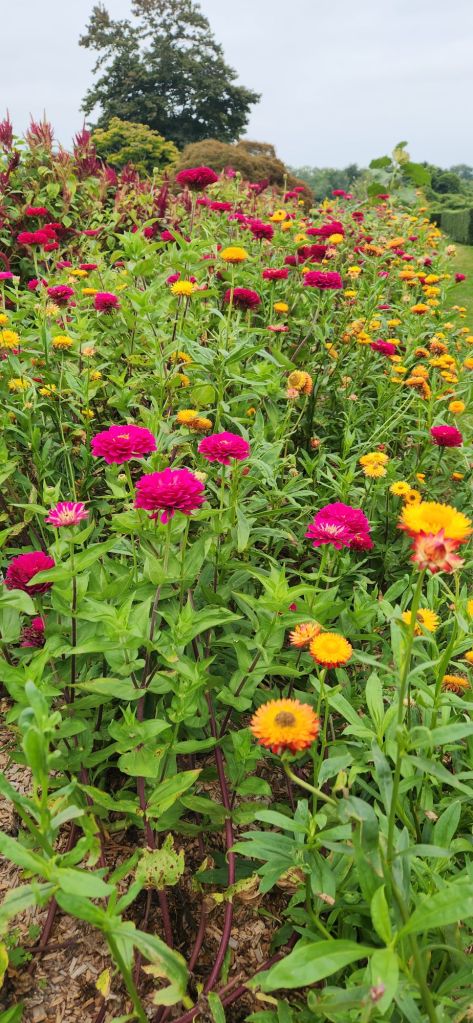
“Like wildflowers, you must allow yourself to grow in all the places people thought you never would.”~E.V. Thompson
“Hello there, my truest friend,”Sylvia says as she looks at herself in the bathroom mirror. She walks away and then turns around quickly to catch another peek. Not satisfied with a quick glimpse, she leans in over the bathroom sink and takes a closer look. “Yep, it’s me, not still me or the same me,” she assures herself, breathing a sigh of relief. She exhales forcefully directly on the mirror, and as it fogs, she embraces the prospect of not knowing who she is becoming and points to her reflection, “Let’s just keep you and everyone else guessing. After all, who doesn’t love a good surprise?!”
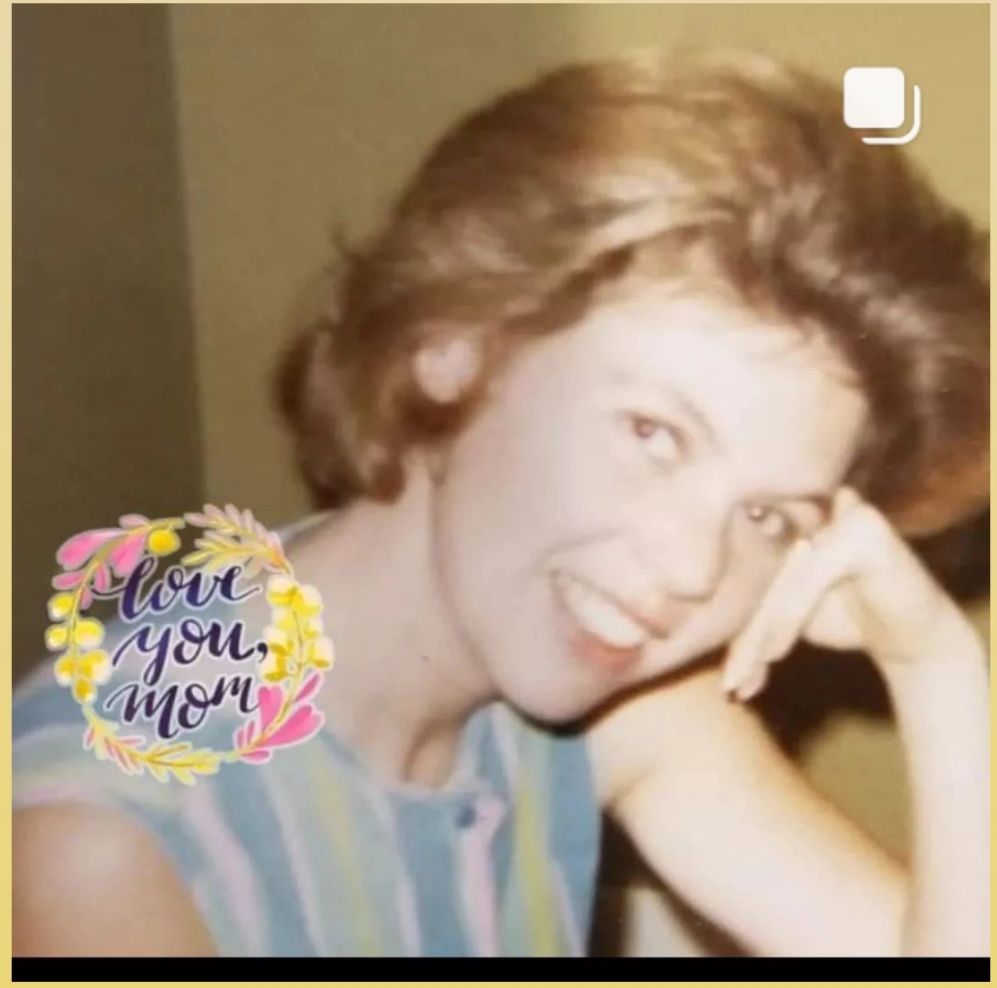
She would have been 84 today. She would have awakened begrudgingly because Dad would have been rummaging through the top drawer of his tall-boy dresser for a hankie, and rather than hold the brass pulls until he closed the drawer quietly, he would have let the pulls drop and jingle. She would have lifted her head from the pillow, given him the look she had been giving him for more than fifty years –the look of a loving tolerance and incredulity since he never learned that his idea of quiet and hers were two totally different things – and then he would have gone to her side, kissed her, and whispered, “Love you, Don. See you later.”
See you later. We say it all the time. As we walk out the door and go off to work or school, the chorus is always the same. See you later. When we meet up with a friend whom we know (but we really don’t know) we may see soon, the standard farewell rolls off the tongue. See you later. As often as we say it, glibly, matter-of-factly, and without any thought to what comes next, we assume later will definitely be our meeting place. At some point, though, later never comes. Later becomes “what if” and “I should have said” more often than we ever care to imagine. Never is later.
Almost a half of a year into my sixth decade, and now fourteen years without the daily wisdom Mom shared with me in both little and small ways (alternating between an implicit and purposeful pedagogy of sorts that only a mother masters), I believe that we never learn our lessons. Never. And I definitely do not believe that we will learn this particular lesson later. Time waits for no one as the saying goes; and yet, with reckless disregard for both the passage of time and life’s promise of mortality, we wait for, hope for, and count on later. When do we decide –when do I decide -–not to count on later? Never. The lesson we have all learned after losing anything or anyone who matters to us is that this is all there is. There is no later. There is no do-over. And yet, here we are with unrelenting hubris thinking that we are so special, such good people, that we will be chosen to have that special time we refer to as later.
Never is the only thing that comes later. I guarantee it. I know it. I’ve been waiting fourteen years, fourteen years worth of birthdays, holidays, special occasions, sunsets and sunrises, to get back time and say all the things I didn’t say to her. Later never comes. Later is too late.
Have I learned? Perhaps. Will I remember the lesson? Will I remember the lesson that her birthday, every Mother’s Day, and the anniversary of her death teach me each year? There is no later. Never is later. Say it now.
****************
Dear Mom,
For fourteen years, I have promised you that I would try to live my best life. I have tried, but I can do better. I promise that I’ll begin. I’ve been putting it off ’til later. Later is not coming; and I fear never is right around the corner.
It’s a gray day here in New England, as many of them are this time of year. The snowfall is tapering off; and Mother Nature has left an adequate blanket of white to remind us that (1) she’s in charge; and (2) nothing is permanent. The wind blows and creates mini dunes in otherwise unscathed parts of the neighborhood (although quite frankly and much to my chagrin, there are few untouched and undeveloped parcels left here).
It’s the thirteenth of February already. Anyone else convinced that as we age that damn clock seems to tick faster, and the pages on the calendar are ripped off even faster? I’ve lost a lot since 2020. We all have. Time especially. I’m thinking about this because? Because I’m alone. It’s quiet. The silence is so loud that all I can hear is the wind blowing and the clock ticking. Am I wasting time? Maybe. Some may think so, and often I agree, but not today. I think the universe gives us days like today expressly for the purpose of pausing. There is an inherent need for quiet and for rest, and yet most of us don’t know what to do with ourselves; lack of activity equates to laziness, yes? No. Not at all. In fact, I only wish my mind would rest as much as my body does. The ticking of the clock isn’t measuring my steps, my hours online, the miles I’ve ridden or driven. The near-deafening strike that the clock-hand marks as each second passes reminds me today that there’s a lot left to do, more to become – and yet I mosey and we dilly-dally – we squander our time consuming ourselves with the notion that we must be busy. We are so busy. Too busy to call. Too busy to write. Too busy to stop and listen to the wind blow, to hear the icy snow tapping on the windows as it begs to come in, and to recognize our inner voices when they tell us to rest both body and mind.
I’m listening today. It’s one of the “busiest” afternoons of this type that I’ve had in a while. Imagine that? Mother Nature knows. And let me just say that I’m not surprised she knows; after all, she is a woman.
Today, Mother Nature is my purple.
(Video rights @debra_coetzer; Music rights Lady Gaga & Mark Ronson)
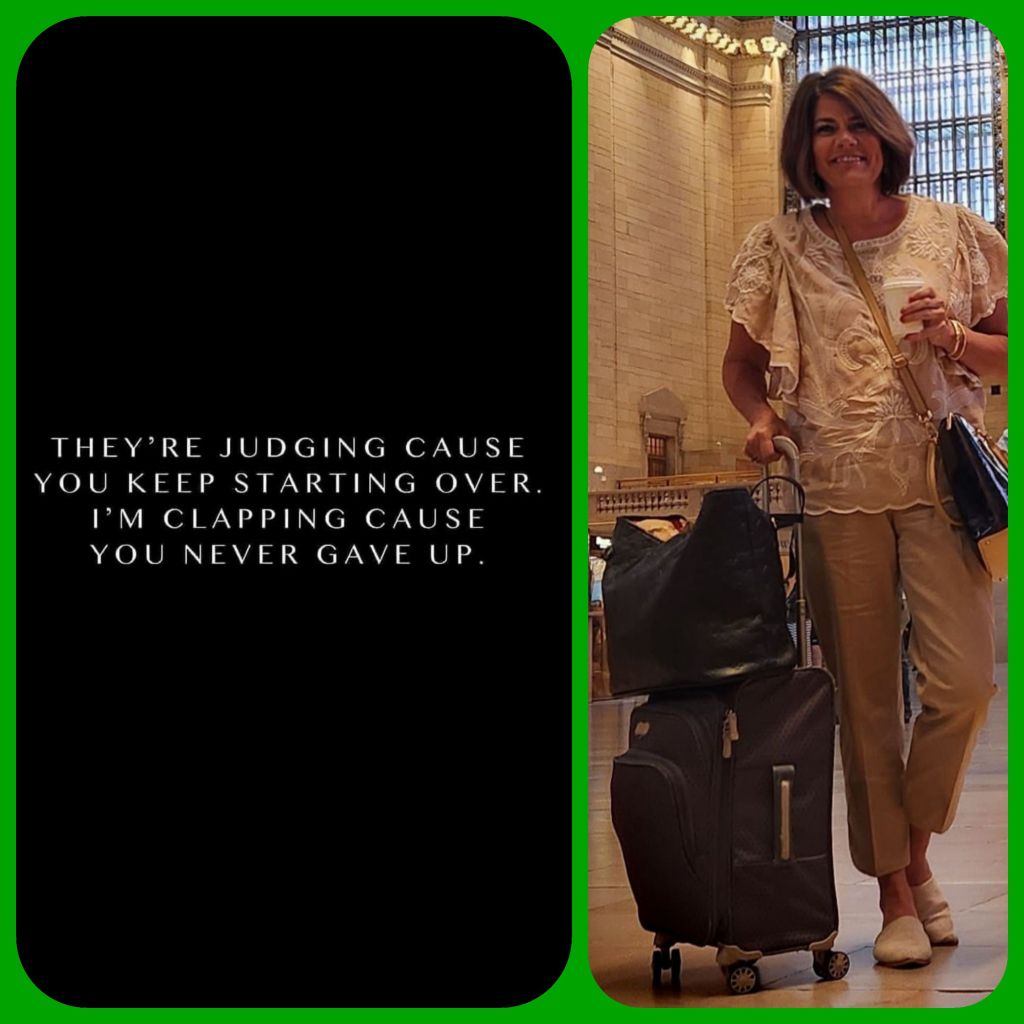
This is the time. This is 60. Sylvia has been celebrating, not just this milestone, but all of the “stones” that she has gathered en route to this point. She has collected, built, torn down, resurrected, rebuilt, resurfaced, and has only one thing left to do: love every bit of herself.
She has not made a million dollars of her own, but she has learned that all the money in the world will not bring her happiness.
She has not published her first book or her second –yet– but she has written them. Will this be the year she shares? She does not know, but she does know that the chapters she has written are originals and all her own. The words and thoughts she has penned on paper and those that remain indelibly fixed in her memory are HERS.
She has not lived according to her own rules, wants, or desires, but she has valued all of the time and energy she has put into making others happy and their dreams come true. Now, she has time and will try to give herself the same respect, attention, and love she has given others.
She has not been kind to herself; she accepted so much less from others and from herself that she came to believe that she could be fulfilled and happy enough with leftovers and crumbs. Perhaps she has not recognized her worth. She has become more aware that the love and value that others have or don’t have for her don’t mean a damn thing. In the end, she has to live with herself, for herself, and move forward believing in herself.
She has not reached her expiration date. She has only just begun.
All that she has not accomplished and not achieved are of little importance. She has survived. Right now, she has more to do, more love to give, more laughter to share, and more to learn. Right now, at this very moment, she has compassion and love and belief – for herself and in herself. This is 60. This is where she begins. She’ll share who she is without fear of judgment because this is what she has and who she is becoming.
“You are going nowhere fast, Sylvia. That may sound harsh, but it’s the truth,” Erma cautions her best friend.
Sylvia could feel those words going into her core like a knife. No anesthesia. No sugar-coating. Erma, never one to mince words with Sylvia –the woman to whom she vowed brutal honesty and unwavering support –was certainly living up to her end of that deal. With a tone of equal parts disappointment (in herself and Erma) and reluctant acceptance, Sylvia replies, “Ouch. That really smarts!”
Smarts. It is a curious expression, don’t you agree? Smart is generally associated with intelligence and sharpness – both in appearance and intellect. “He’s such a smart dresser.” “She has such a wry sense of humor and can be a real smart aleck!” The verb though is a whole different ball of wax. “That smarts.” That hurts. It stings. When something smarts, well, it is the result of a painful remark or misstep. In this case, Sylvia feels wounded, almost bitten. She knows that Erma’s comment is meant to be constructive in some way; but at that moment, Sylvia cannot figure out her friend’s intention. The truth hurts; of that, she is abundantly aware.
“Erma, what do you mean? Why would you say that? After all, I’ve been on-the-go since the beginning of the year pretty much,” Sylvia questions. “I’m going somewhere. “
Recognizing the hurt and defensiveness in her friend’s tone, Erma realizes her statement demands clarification. “Nowhere. I didn’t mean that the way it came out. What I should have said is that you always amaze me. No plan. No painstakingly contrived itinerary. You’ll go anywhere! Anywhere is nowhere without a name, a ticket, or a place to call your own.”
That smarts. Sylvia decides to pull out the knife, dress the wound, and begin again in this moment.
“There would have been more I love yous … more I’m sorrys … more I’m listenings … but mostly, given another shot at life, I would seize every minute of it … look at it and really see it … try it on … live it … exhaust it … and never give that minute back until there was nothing left of it.” ~Erma Bombeck
“Are you looking for trouble, Sylvia?” Erma, hoping for a juicy reply, asks her friend.
“No, I don’t think so. Well, perhaps – maybe a little,” Sylvia admits.
“Good, get out there, and do it for the team!” Erma adamantly encourages. **************** Whatever you choose, however many roads you travel, I hope that you choose not to be a lady. I hope you will find some way to break the rules and make a little trouble out there. And I also hope that you will choose to make some of that trouble on behalf of women. [Commencement Address, Wellesley College, 1996] ~Nora Ephron ****************
Fresh from a walk on the beach with her canine companions, Sylvia rushes to get toher cellphone which she had purposely left on the counter before scurrying out of the house. Now tangled in both the arm of her down parka and the infinity scarf around her neck, she realizes that the phone in her pocket might have been a wiser idea. As she attempts to remove the final layer of winter garb she wore to insulate herself from the frigid temps on the lake, she manages to pick up the call before the fifth ring.
“Hello, hello, I’m here. Hang on and let the message play,” she advises. “Erma, I know it’s you, so give me a second.” Sylvia tucks the scarf into the arm of the coat and then hangs it on the rack in the entry. “Okay, I’m back. I can put the kettle on while we chat.”
“The kettle? Tea, Sylvia? What’s happened to you? I don’t think I’d recognize you were it not for the lighthearted energy I hear in your voice. It reminds me of the Sylvia I would laugh with at the cottage on the Cape decades ago,” Erma reminisces. “Wherever you are at this very moment certainly agrees with you. Maybe you should think about extending your stay – perhaps even a move there,” Erma jokes half-heartedly as she worries what Sylvia’s response might be. It is not that she doesn’t want her friend to be happy because she prays for Sylvia’s happiness more than her own these days, but she knows that this location, while just what she needs now, is not the answer for the long-term.
Sylvia, able to discern Erma’s suggestions as mere jest, plays along for the moment. She grabs what has become her favorite mug at the lake house, drops in a licorice spice sachet of tea, and pours the boiling water. And as if on auto-pilot, the two friends get caught up on life in the time it takes for Sylvia’s new favorite beverage to steep.
“So, as you now know, nothing new on my end. Same old stuff. I refuse to complain though, Syl, because it gets me nowhere and just brings me down. And even though we both enjoy a good bitching session every once in a while, after all we have indeed bonded over common annoyances and and mutual pet peeves, I recognize that the current state of affairs, personally and globally, requires a great deal more than whining. Don’t you agree?”
Sylvia, trying to digest Erma’s remarks and cultivate a witty reply, sighs. She knows that Erma is right. Complaining is not the answer. “Complaining is noise. It really is just a whole lot of barking without any bite,” Sylvia grumbles.
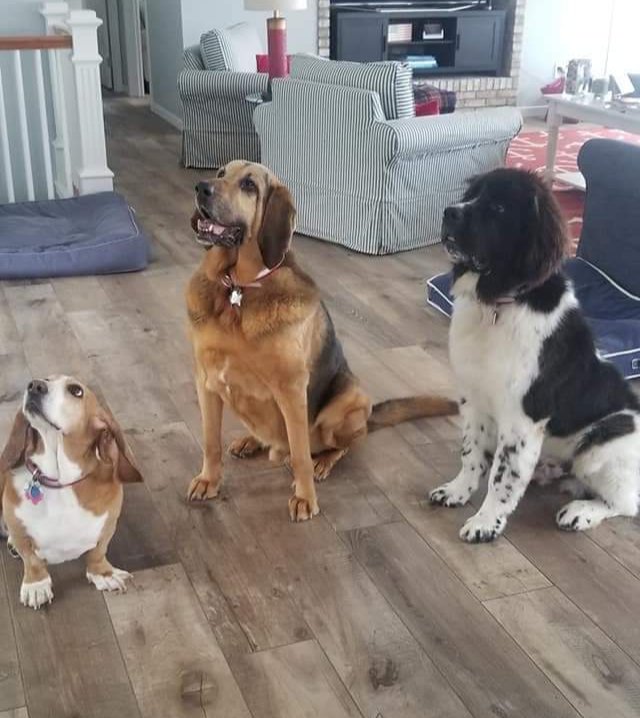
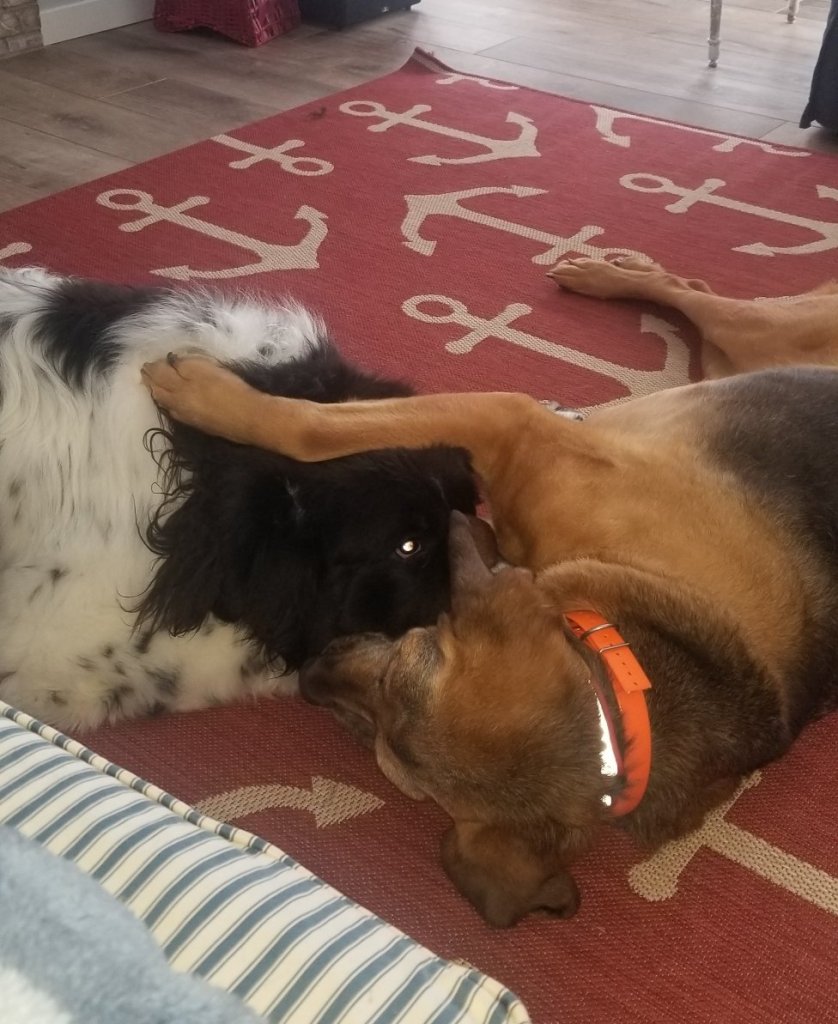
After a pleasantly uneventful call with her friend whom she has come to rely on for making every non-event memorable in its own way, Sylvia contemplates the “noise” in her life at the moment. She smiles, amused by the irony of her earlier comment to Erma, as she listens to two of the three dogs in her charge. The youngest and the oldest, both males and large breeds, bark and growl playfully as they romp in the great room. The middle child – and anyone familiar with the personality of hounds knows that they are as close to humans as dogs can come – is female; and stereotypes notwithstanding, she demonstrates many of the traits of a middle-aged woman. Sylvia watches as the seven-year-old basset who is eerily close to being her canine counterpart ricochets between muttering to herself (as she feigns disregard for those in her line of sight) and issuing a loud, wide-toothed warning which includes a little chomp should the Landseer puppy infringe on her personal space, i.e. any of the private parts beneath her tail. The noise in Sylvia’s life, literally and figuratively the barking and whining; and the unveiled distaste and intolerance for the barking, well, that might just be the absolute root of a midlife woman’s bite, Sylvia’s especially.
Just a Couple of Dudes
Midlife women, according to Erma, have earned the right to bite. All women – hell, all people on occasion – deserve to let their distastes and dissatisfaction surface and be known. And loudly at that! Erma, always the one to break down what seems complex and unnecessarily troubling to Sylvia, points out to her friend, “People are basically dogs; dogs are just more honest about their feelings. I’ll leave you today with this: If humans barked and bit as decidedly as canines, we would have fewer mixed messages.”
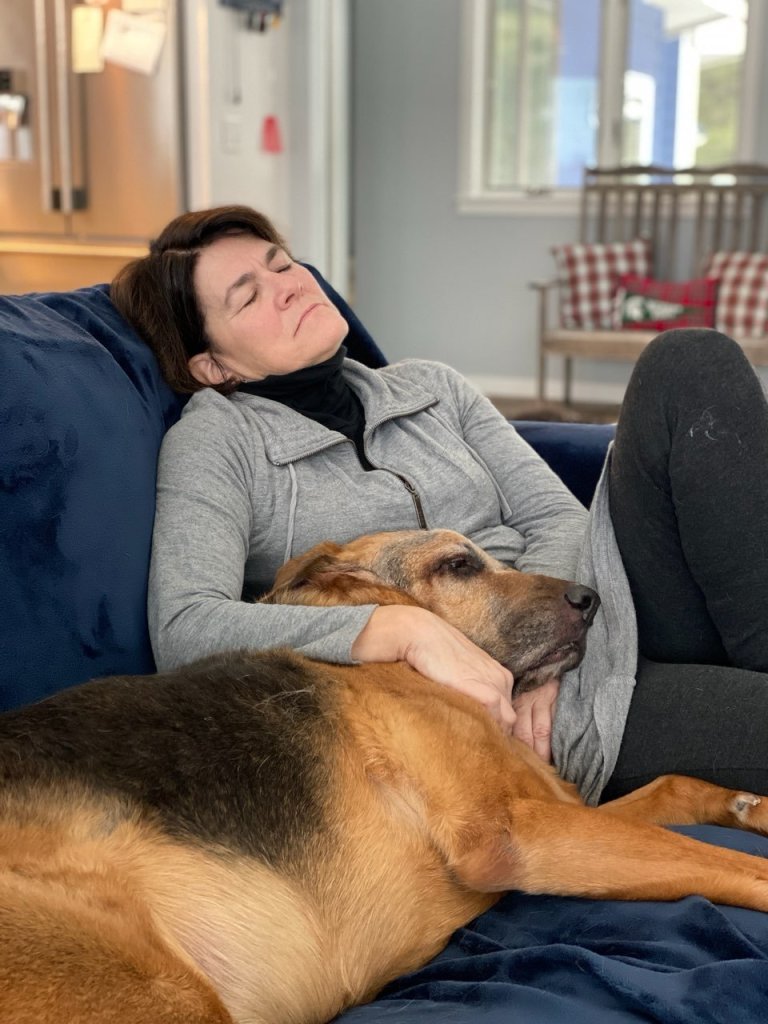
As she hangs up the phone and steeps another bag of comfort and determination, fittingly she has chosen Lady Earl Grey, Sylvia considers Erma’s remarks.“People are basically dogs.”“Maybe dogs are more like people,” thinks Sylvia. Before she allows herself to become mired down in a “compare and contrast” internal diatribe, Sylvia observes the three fur children in her company. The two males wh poo are now comfortably in their beds after a short-lived yet energetic dose of raucousness remind her of…well, men. The younger one, the largest and youngest of the three, Eustis has just celebrated his first birthday; in human years, he’s the equivalent of a sixteen-year-old boy. He’s playful at inappropriate times, demanding at inconvenient times, and endearing as only a good-looking teenage boy can be at any given time that he wants something. He does not seek to make trouble, but he risks it all in good fun, primarily because his hormones are raging. Everything he does he does with the underlying motivation of being fulfilled. The other male, less spry and more refined (despite the gobs of drool gifted to him by virtue of his breed) is older, the eldest of this mismatched albeit devoted pack of siblings. Kramer, long and lanky, conducts himself with both contradictory grace and inelegance, much like a man on the cusp of retirement. He has learned to put up with barking and biting. He knows when to engage and when to head for the hills, in other words his favorite tufted bed in the corner of the kitchen. There he retreats when he has had enough. He has appeased the baby of the bunch with some minor play, just enough to warrant another rest. Kramer wants nothing more than to maintain his seniority; he has earned it. And if on occasion he gets the opportunity to rest his head in the lap of a woman, then he considers himself a lucky guy. He is sixty-six, and he accepts his plight, knows his worth, and knows that life amounts to barking, biting, and his willingness to accept both because at the end, there will be a treat in it for him – either a nap in a sunbeam, a walk on the beach, or a warm cuddle as he leans on his favorite human. (Sylvia stops for a moment. A tear has fallen. She can think of no one more like her dad than Kramer.) So, yes, in a nutshell, men provide much of the barking. According to both Erma and Sylvia, barking is complaining; and while most men do not think that they whine, the midlife woman knows differently. Enter the basset.
Kramer
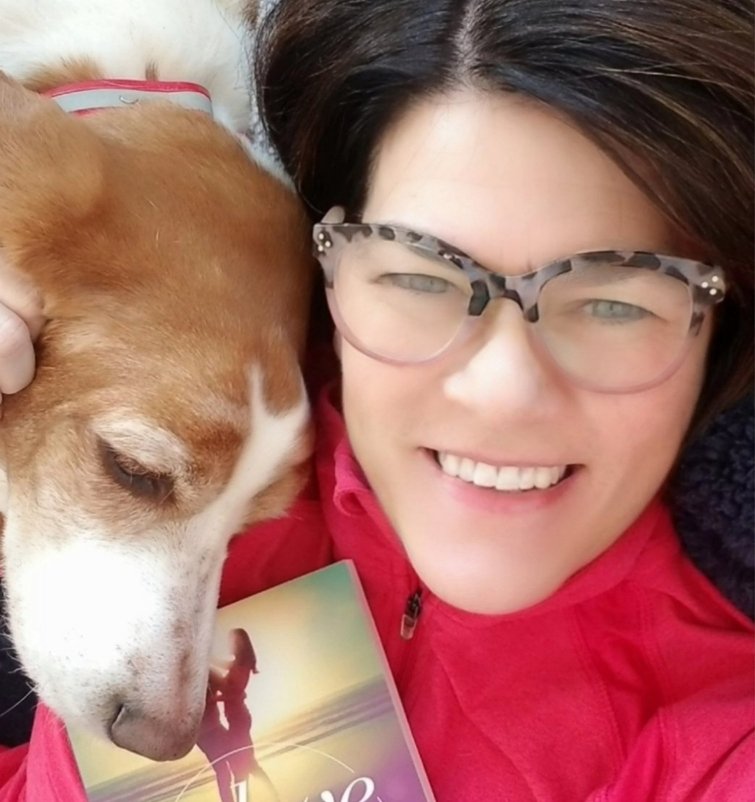
The bite. The almost eight-year-old hound has had her fill. She is a woman, fifty-six years in the making, who knows when to bark and when to bite. She has finally learned that the barking – the incessant complaining and whining from herself as well as others – is exhausting. The only sure thing to alleviate her angst and assuage her feelings of worthlessness is a good bite. Reese, the butterscotch-hued friend at Sylvia’s feet most days, parallels Sylvia’s life. When she is bored or tired, she retreats and curls up – alone. She does not need anyone to relax her. When she is hungry, she eats. Sometimes it must be early, and other times she’ll sleep in and awaken slowly. She decides. Her clock, her rules. And then there is the issue of desire. Reese does not want to be groped or prodded by either a horny, young man looking to get his rocks off or an older man seeking to claim her as his prize, his bitch. No, Reese will have none of that. She is done with all of that. The barking has taken its toll. As Sylvia listens to Reese snore in deep sleep, she wonders what makes up the basset’s dreams. A good bone like a nice wine or bourbon. A walk on the beach solo with no one giving her direction asking her either to lead or follow. Does Reese dream of companionship? Perhaps, after all she is a pack dog; she loves company. Sylvia, like Reese or vice versa, does not require full-time engagement though. She has been there, done that, and she is not going to make herself smaller to stop the barking from others. She will just drown it out. And the worst that will happen might just be the best thing ever. She’ll bite and move on.
Just a Couple of Midlife Women
Let the barking cease. Take a bite. Grab a bite. Bite me. The bite of a midlife woman conquers all.











 "ARE YOU THERE, ERMA? IT'S ME, SYLVIA."