Sam’s Lesson: The Value of a Good “Sole”

He didn’t wear dress shoes often, but when he did, he wore a good pair of Bass Weejuns or cordovans. He preferred quality to quantity when it came to shoes and life. I’m thinking so much about that today, five years since he left this world, five years since he let go of  my hand to rejoin Donna, my mom and the love of his life.

This year, though not nearly as piercing, the pain (which some know as grief but I refer to as an abiding love) endures. My thoughts and memories are more abundant for some reason and in many ways clearer. That may or may not be true, and I’m certain that many will take issue with my claim that the passing of time brings stability and comfort to one who suffers tremendous loss, but I’m sticking with it. I’m clearer. After five years, I am finally breathing a bit easier, inhaling and exhaling regularly without holding my breath in-between; am more forgiving of myself and others (at least I’m trying); and the internal video in my mind’s eye of Dad has been edited to project more pictures of him talking, laughing, engaging and living than of him sitting in the wheelchair smiling and merely surviving as a semblance of the man who lived and loved so actively before Alzheimer’s. Oddly, today as the reel played in my mind, it became more colorful; lo and behold, there was Sam –front and center, at my induction into National Honor Society, at my college graduation, at my rehearsal dinner, and so many other events – wearing his Weejuns.

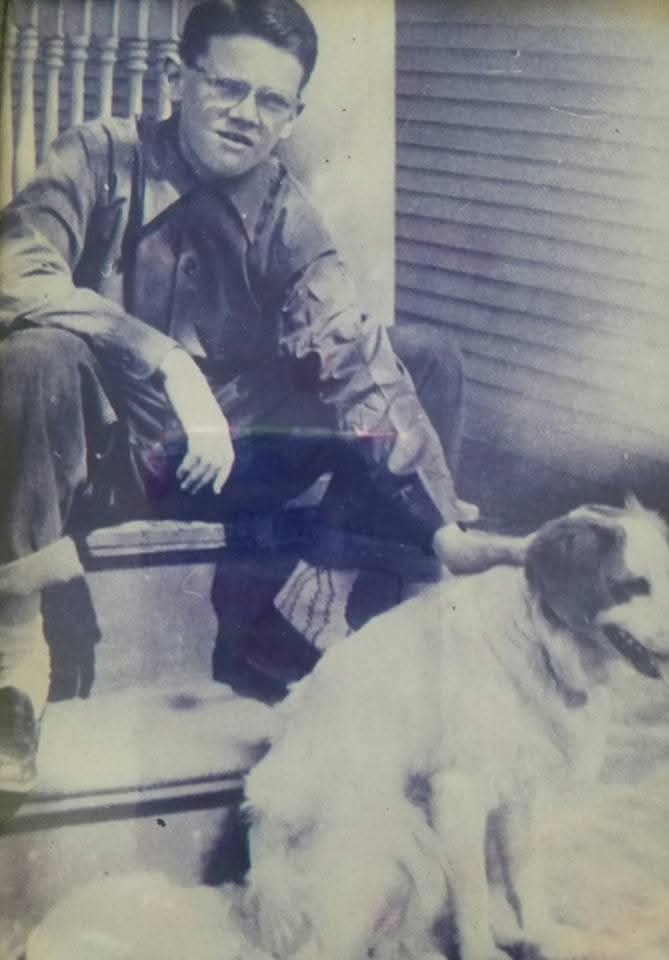
Of course, over the years, Dad’s original Weejuns (otherwise known as penny loafers) have disappeared. (He likely had two or three more pairs, soled and re-soled) over the course of his fifty-one years of marriage to Mom.) The originals are seen here in this photo of him and his beloved canine companion, Shiner. Oh, how he cared fully and deeply for anything and anyone he loved. He held himself responsible for and accountable to their care. He took it very seriously, as evidenced by thirteen-year-old Sam’s expression – the countenance of a Jewish boy who had just been burdened and blessed with the job of being a man. This photo of that young man wearing those well-worn weejuns has left me smiling and crying and so very grateful. My dad, one of the most humble and kind-hearted men, knew the value of a good sole… and a good soul. 

His memory– all of the memories he shared with me through his storytelling and through the creation of those we made together over more than five decades as father and daughter– is an eternal blessing. I am still learning so very much about love, life, and the unquantifiable value of a good soul.

All of us should be as aware as he was of the good fortune of living a life so fully that we wear out only our soles and not our souls!

Never Comes Later

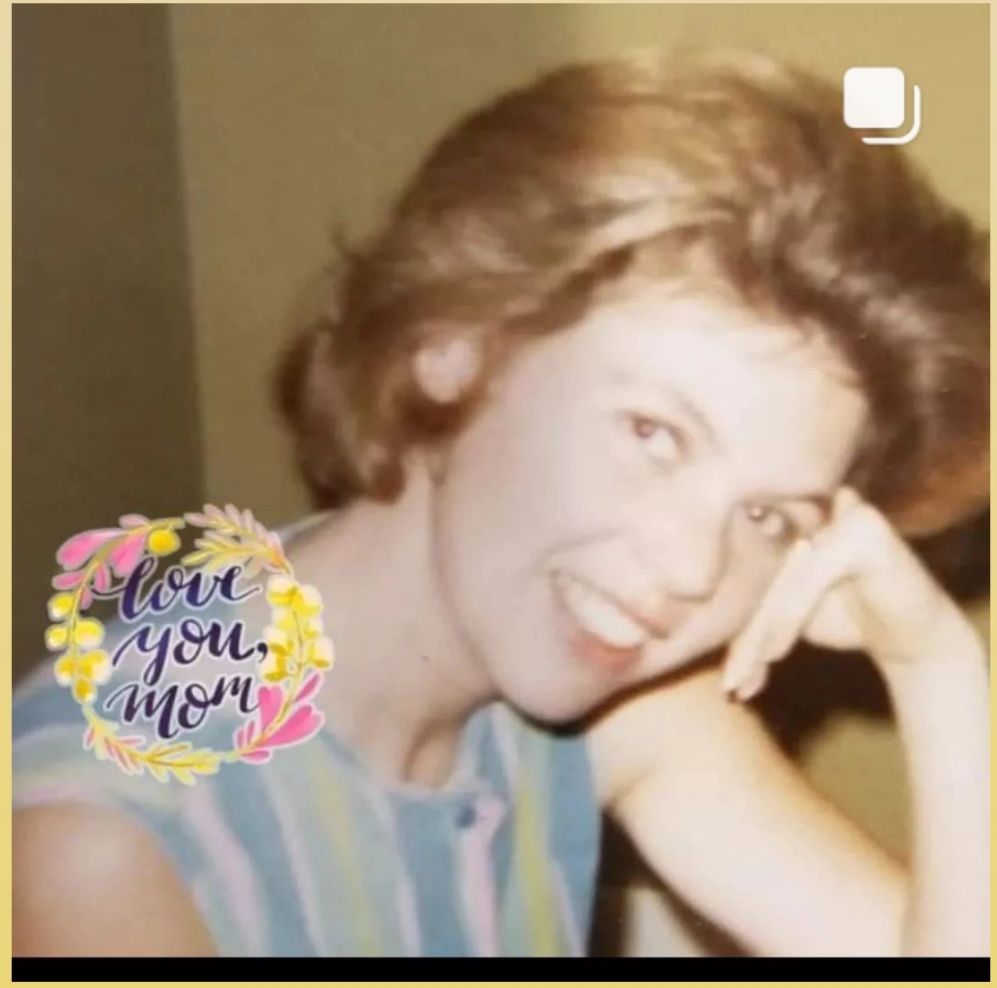
She would have been 84 today. She would have awakened begrudgingly because Dad would have been rummaging through the top drawer of his tall-boy dresser for a hankie, and rather than hold the brass pulls until he closed the drawer quietly, he would have let the pulls drop and jingle. She would have lifted her head from the pillow, given him the look she had been giving him for more than fifty years –the look of a loving tolerance and incredulity since he never learned that his idea of quiet and hers were two totally different things – and then he would have gone to her side, kissed her, and whispered, “Love you, Don. See you later.”

See you later. We say it all the time. As we walk out the door and go off to work or school, the chorus is always the same. See you later. When we meet up with a friend whom we know (but we really don’t know) we may see soon, the standard farewell rolls off the tongue. See you later. As often as we say it, glibly, matter-of-factly, and without any thought to what comes next, we assume later will definitely be our meeting place. At some point, though, later never comes. Later becomes “what if” and “I should have said” more often than we ever care to imagine. Never is later.

Almost a half of a year into my sixth decade, and now fourteen years without the daily wisdom Mom shared with me in both little and small ways (alternating between an implicit and  purposeful pedagogy of sorts that only a mother masters), I believe that we never learn our lessons. Never. And I definitely do not believe that we will learn this particular lesson later. Time waits for no one as the saying goes; and yet, with reckless disregard for both the passage of time and life’s promise of mortality, we wait for, hope for, and count on later. When do we decide –when do I decide -–not to count on later? Never. The lesson we have all learned after losing anything or anyone who matters to us is that this is all there is. There is no later. There is no do-over. And yet, here we are with unrelenting hubris thinking that we are so special, such good people, that we will be chosen to have that special time we refer to as later. 

Never is the only thing that comes later. I guarantee it.  I know it. I’ve been waiting fourteen years, fourteen years worth of birthdays, holidays, special occasions, sunsets and sunrises, to get back time and say all the things I didn’t say to her.   Later never comes. Later is too late.

Have I learned? Perhaps. Will I remember the lesson? Will I remember the lesson that her birthday, every Mother’s Day, and the anniversary of her death teach me each year? There is no later. Never is later. Say it now.

****************

Dear Mom,

For fourteen years, I have promised you that I would try to live my best life. I have tried, but I can do better. I promise that I’ll begin. I’ve been putting it off ’til later. Later is not coming; and I fear never is right around the corner.

Love you and miss you. Always.

K.

Forever and Always.

Jelly Donut Love: It’s About the Filling

Sylvia: I’m thinking about life right now in terms of jelly donuts.

Erma: Of course you are. Everyone should think of life that way. Sweet and full.
****************
One year ago today, while I held my father’s hand as he left this earth with the same strength, dignity, and humility that I imagine he entered with, I thought, “Why? Why now?” And after reflection with my son and conversations with God and those in my circle, I realize that the point is not how he died or even that he died. The key is how he lived. With integrity. With conviction. With zest and appreciation. With gratitude and intention. With love. With LOVE. Jelly donuts, folks.

And now I know. My father’s purpose and legacy is one that is so simple, so timely, and so easily missed if you haven’t been paying attention. Jelly donuts.

My father was raised by a man who emigrated from Russia in 1916. A slight, sweet man who raised a family and worked hard to provide. A man, a zayde, who trekked to Cousin’s bakery (New Britain, CT) to pick up jelly donuts and bulkies for his grandchildren. My father, Sam, learned from his father, Jack, the importance of jelly donuts. Jelly donuts every Sunday morning, rain or shine. Jelly donuts equalled love.

So, Dad, like his father, brought his four children jelly donuts every Sunday along with hard rolls and Breakstone butter. (Truth be told, a dozen mixed including jellies for him, two plain for Mom, and glazed, chocolate frosted, and sprinkles for the kids.) Every Sunday. When his children began to have children, Sam became Pop-Pop and would make the rounds to his grandchildren. Jelly donuts. Love.

When my father was declining, I never thought about my actions. I just did. I went into auto pilot. Comfort and consistency. Dad loved his jelly donuts. From Cousins bakery in New Britain to Village Bake House in Niantic to O’Henry’s in Morgan Hill to Dunkin on Cape, we devoured, savored, and indulged in jelly donuts. And I vowed when my father left my home that he would never go without a jelly donut! I’d like to think he never did.

Jelly donuts. Love. Giving and receiving of both. THAT is my father’s lesson and legacy.

Dad, the first man who had my heart❤ Missing you terribly, but I’d like to think that you and Mom are enjoying your favorites today and fighting over the crossword.
****************
“To love and have been loved. That is the essence of a life well-lived.” ~ (K. Morgan)

Sweet filling. Oh, to be savored!

Gifts of the Season

The transition from Thanksgiving to Christmas (with Hanukkah right in-between this year) should be fairly seamless, incredibly meaningful, and perhaps even bittersweet, especially for those who have become acutely aware of what it means to be blessed and live with intention. The anticipated seamlessness between the holidays has been anything but smooth and unfettered though. The intervening days and weeks have instead been marred with more heartache than ever imagined, as the pandemic and its effects leave some sick, others on death’s door, and still others left in the wake to deal with losses (of life for some, of livelihood for others) of unfathomable proportions, the likes of which can barely be handled in even the sanest and most stable times.

Only through loss, grief, despair, and sorrow though have I learned what it means to experience bounty, joy, and peace. The gifts and acceptance of the latter only come when the three former have been endured with grace. I don’t pretend that I have mastered grace, but I’ve definitely cleared a path to it. The steps toward it offer me mild relief when I stop momentarily to be present and appreciate simple abundance. I have more than my fair share; many of us do.

Gratitude. Forgiveness. Order. Peace. Joy. Purpose. In these last few days, I have asked for both the giving and receiving of each; and in their absence no matter the reason, my plea is for grace.

The gifts of the season? Aren’t they gifts that we should generously offer and graciously accept all year long?

Generosity and grace: the presents in presence.

Six Says Goodbye

Who knew that the sixth time something happens it still has the capacity to take one’s breath away, to give pause, to cut to the core? If the first is a surprise and the third is old hat, then certainly the sixth time should be tedious and uneventful. Not the case. At all. The passing of her father’s sixth roommate in not quite four and a half years shook Sylvia. One would think that she would have grown accustomed to death, that it would have become easier to handle and accept, especially in light of the daily visits to the nursing home. Not true. Not for her anyway.

Out of respect and privacy, I’ll refer to the dear man who left this world at around midnight, late Friday/early Saturday last week, as Mr. H. He was frail, ailing, aging, and I’m hoping he was at peace. I’d like to think he left on his own terms and had made peace with himself and anyone and anything else that gnawed at him in this life, but who knows, right? I only know what I know and what I saw.

Mr. H had been at the skilled nursing residence for some time; it was his home for better or worse. He and his older brother had made the skilled nursing facility their mutual residence in their later years, living and rooming there together as each dealt with his own infirmities. They had each other and that was a lot. Maybe that was everything. I think it just may have been! When his brother died, Mr. H moved upstairs into my father’s room. In my mind, once people share space for an extended period of time whether under the best or worst of circumstances, it makes them family–automatic family because (1) you are living together and not necessarily by choice; and (2) you’ll be privy (whether you want to or not) to all of the intimate and likely not-so-pretty details of the other’s life- family dysfunction and bodily functions. Let’s face it, folks. Once you’ve shared space, passed gas, and dressed and undressed in front of another day in and day out, you are no longer strangers. Again, for better or worse. So, Mr. H became family. Although he and my father never engaged in conversation, I do think that each found quiet comfort knowing that there was life, another being, just a few feet away.

For Dad and Mr. H

Here is why six is so tough though. I came to know one through five through their visitors, their friends and families. Whether frequently or sporadically, each was visited at some point by someone who cared. I had the honor of seeing each man engage in life at various moments and experience joy, even if only for a few minutes at a time; when a daughter or son dropped by on the way to or from work; or when a wife was able to find the physical and mental fortitude and/or transportation to make the trek. The little chunks of time shared with a loved one made all the difference. The “brothers” whom my father came to know in his own way, they were allowed to be who they had been all their lives, authentically and intrinsically themselves because of their relationships and loves, rather than who they had become as a result of the injustice and weaknesses of their illnesses. Six, Mr. H, was different. He never had a visitor. He hadn’t had one since at least six months before the pandemic. Think about that. Not one person. No one in this world felt the need or desire to visit Mr. H. Did he really have no one?

I could write forever ad nauseum about this, but I won’t. Frankly, it’s upsetting; and those to whom I’m trying to make a point are those who failed my father and will likely fail others who hang on to a love that cannot be reciprocated or offered unconditionally. I don’t know. I’m not their judge, but I do recognize a hubris, a lack of accountability, and a seeming nonchalance about their role in a loved one’s final days. Mr. H at some point in his life engaged with the world. Perhaps he was mean, a recluse or curmudgeon. Again, I don’t know. However, don’t we as human beings owe one another something – a morsel of decency and a little tenderness, especially in the end? Just as we all came into the world being anticipated and welcomed, wouldn’t it be lovely to leave the world or to help someone leave the world knowing that it’s not all bad? He or she mattered. If all another teaches us in the course of his, her (or their) life is how not to live and what we don’t want, then they have done this world and likely all of humanity a huge service. They have made your life, my life, more meaningful.

Six was hard. Mr. H, I hope you know that you made a difference. You were family. I will not forget you. May you rest in peace. Say hello to your brother and brothers, my father among them now.

Sometimes, almost always these days, Sylvia hastens to remind herself that we only learn how to live by watching how others are treated or mistreated, especially as they approach death. How to say hello comes naturally and easily. How we learn to say goodbye? Not so easy. How will you say goodbye?

All & Everything

Last night she closed her eyes to the sound of teeming rain and claps of thunder. She awoke to a deafening silence amidst a gray background. So that was it. Another day ended and another in the works.

“See, Sylvia, it all keeps moving along,” Erma reassures her friend.

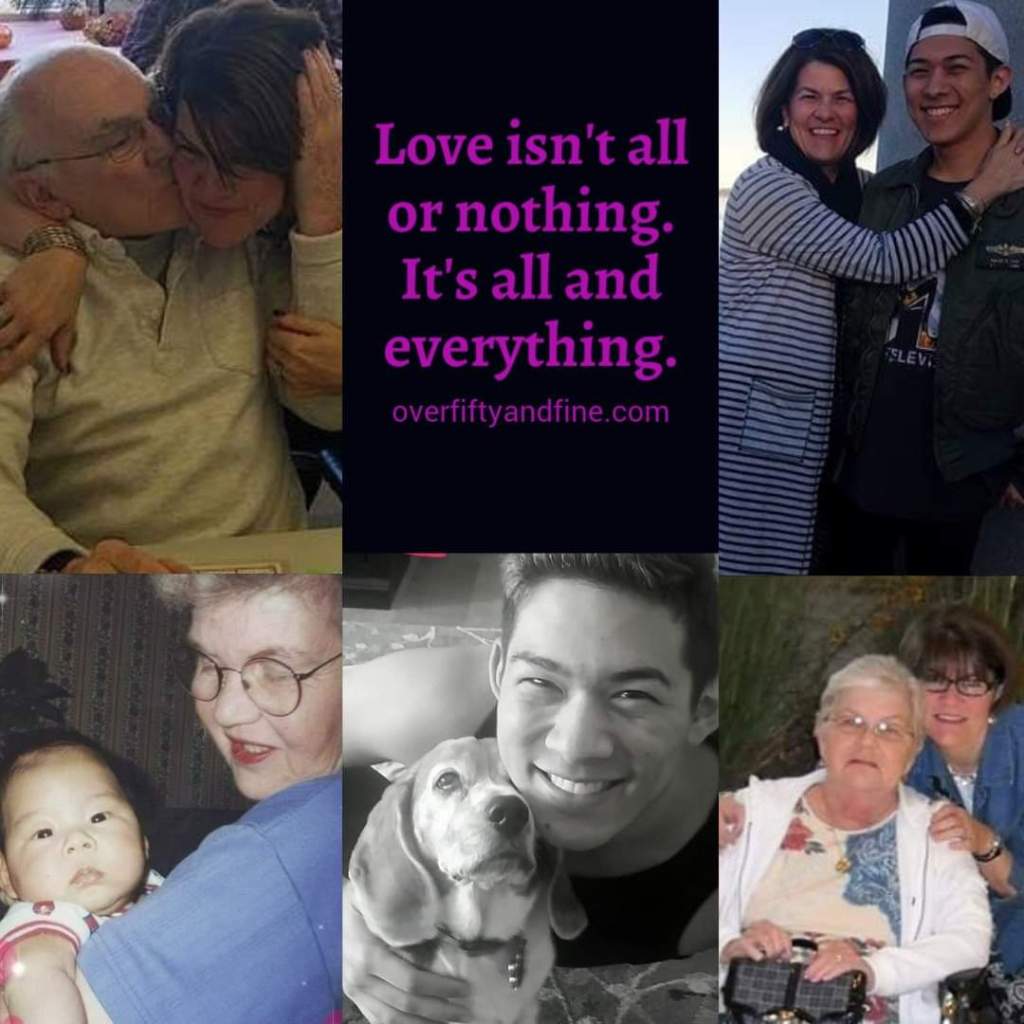
“Indeed. I never said the loss was all or nothing. It’s been all and everything,” professes Sylvia.


When you experience loss, people say you’ll move through the 5 stages of grief….
Denial, Anger, Bargaining, Depression, Acceptance
…..What they don’t tell you is that you’ll cycle through them all every day.
~Ranata Suzuki

All the Thoughts She Never Had

Erma: Well, here it is another new year. You know what that means, Sylvia, right? Everyone and her mother will ask you about your resolutions. So, what’s going to be your stock response?

Sylvia: My reply? I can tell you what my answer won’t be. I’m not going to vow to lose weight. This is the year I learn to accept that pounds may or may not come off, but that the number on the scale won’t define me. And you know why I’m certain of that, Erma? Because after resolving to lose weight the last two years in order to become the size four that I haven’t been since 1992, I finally lost those pesky ten pounds. I threw out the damn scale!

Erma: Okay, so that’s one non-answer. Anything else you are committing to do or to change?

Sylvia: I’m determined to accept my plight or rather my future as a never-thinker.

Erma: Your what? You mean an over-thinker. Yes, that’s a good goal. Stop that.

Sylvia: No, not over-thinking, Erma. I said I’m going to embrace my never-thinking.

Erma: Okay Sylvia, hold on for a second. I’m grabbing a fresh mug for this. It’s bound to be good.

Have you ever thought about all the things you have never really thought about and then realized that those are the issues, the woes, and maybe even the little slices of joy that you’ve been hiding away or hiding from? Sylvia’s been doing just that this last week, perhaps even the last month, as she reflects on the last year- life, love, and loss of all kinds. And, of course, glimpses into the last year have done exactly what she never imagined they would do; they have led her to recognize that it is not her overthinking that burdens her mind, body, and spirit. It is all of the thoughts and events that she never fathomed would hit her, happen to her, and become a part of her being that are bringing her–hell, maybe even catapulting her-fiercely into the new year. Highlighting the past year for Erma pulls Sylvia to places in life she never thought she’d visit!

Still perplexed? “I never thought that would happen [to me].” You know that expression most certainly. Everyone says it at some point, at many times, in his or her life. The truth is though that as we all try mightily, knowingly or subconsciously, to convince ourselves of what will never happen, all of it almost always happens. So, on this new day and the first day of this brand-spanking-new year, Sylvia reminds me to think about all that I have survived, big and small, heartwarming and heartbreaking, all that I never thought about until I had to think about it.

She never thought she’d be able to live without her best friend, her mother, another year, yet here she is. Nine Christmases later and she’s doing it. She’s getting up each day and learning to laugh and hope again.

She never thought he’d be here another year. It’s a mixed blessing and one that torments her every single day. He’s leaving her and this world slowly, but she’s accepting it, albeit just as slowly, that it is out of her control.

She never thought she’d be able to find joy or a bit of a silver lining to his illness, but she is. She’s trying. The light in his eyes, the smile that still remains that only he can give to this world- those are the silver.

She never thought that she would be at a crossroads at this time in her life. After all, women over fifty should be settled, comfortable in their own skin, and feel accomplished, if not professionally then most certainly personally. And yet she’s none of those and all of those, and she’s surviving it. In fact, there are even days when she appreciates her ability to change her mind and risk throwing others’ lives out-of-whack for a change. (Yes, she never thought she’d relish breaking a few rules, unwritten and self- imposed ones, but she’s doing it and accepting that sometimes self- preservation is most important.)

She never thought that she’d be a part of a dysfunctional family and be okay with it. She’s learned that we are all born into families, but we don’t have to choose to stay. We owe it to ourselves and to the world to be the very best versions of ourselves. When people make us dislike who we are simply by being in their presence, it’s time to change surroundings, live our truth, and find a tribe that loves and supports us– no matter what!

She never thought that she’d see home as a feeling rather than a place. She has old and new friends who “follow” her, check in with her, and who welcome her with loving, nonjudgmental arms and minds. When she is in their company- physically, mentally, and spiritually- she is home.

She never thought she’d look forward to time by herself, to herself, where she’d be happy with her own company and nothing more. It’s a process, but it’s happening.

And she never thought, not in a million years, that she could love another human being more each day. That’s just plain crazy! She has learned though that the feeling of a growing love comes from watching those she loves live their truth, and it comes from within when we learn to live our own truth. Her truth is: she is flawed and fabulous. She makes mistakes and is learning to forgive herself. “Life in full bloom” she sees in her own child and hears in his voice as he finds his place in the world. She never thought that he would be her teacher and that the greatest lesson he would impart would be that she too deserved happiness and unconditional love.

She never thought she’d make it through this past year, but she did!

Erma: Wow. I’m exhausted by all of that thinking.

Sylvia: Oh, it’s not all that bad. It’s only tiring when you overthink it.

Keep going, friends. 2019 is sure to be a year of unexpected and unforeseen happenings and feelings. Let’s just call it life.

With wishes for love, peace, laughter and hope,

Sylvia & Erma

CHECK OUT THIS LINK WITH THE AUDIO UPDATE OF THIS POST ( January 1, 2021):
“Choose to Remember”

Erma’s left to go about her day after coffee and conversation with her best friend. She leaves Sylvia to contemplate the day and so much more.

As we finally come into summer weather, I think often of my family, extended and adopted, as well as my many friends- both near and far- who will be celebrating big milestones with and for their loved ones and the country with great fanfare and zest. My heart becomes instantly full. And then, just as quickly, I grow agitated and even a bit sad and disgusted.

I thought about this long and hard before I decided to share these thoughts, and then I remembered, that each of you has the option to either read and reflect or skim and skedaddle. So, I’m sharing because -to me- this is the stuff that we are meant to share, so that we can help each other through the rough spots. And one day each of us has or will have a couple, several, or many very rough spots. That is inevitable.

When my mother became ill in 2007 and she and Dad came to live with me and my family in California, everything changed. Family dynamics. Relationships. Life in general. My mom fought her battle miles away from many, but still she felt connected to the world. She was still a citizen. Still a mother. A nana. A friend. A sister. An aunt. She received calls, cards, visits, emails, etc. That ability to communicate is so often, too often, taken for granted these days because perhaps it requires so little forethought to text or communicate via technology. (Communication though does require thought– for now anyway.)

When one is fighting for life, it is an internal war of massive proportions. Your loved ones try to empathize and offer support and help to fight the daily skirmishes. The war though, the one that will inevitably be lost, which is really not a defeat but a matter-of-fact in life, is a solitary one. Death. Mom fought with all her might. People admired her strength, her guts, her spirit, and her grace. And indeed, my mom was strong, gutsy, spirited, and graceful. My mother was also a fairly private person who had a very public illness. An illness which everyone- EVERYONE- is touched by and despises.

Here’s where my thoughts, sadness, and disgust come into play. Woe is not I. Woe is WE. We fail in so many ways.

My father as you all know battles another dreaded disease- Alzheimer’s. He’s in the late stages now. He, unlike my mother, was a very public person, yet he has been saddled with a very closeted disease. It is we as a society comprised of supposedly loving families and friends who fail. It’s not that people don’t care. It’s not that awareness isn’t growing. I think it’s this simple and this heart- wrenching. The man that people knew is closeted. While he is locked away in his own mind, it is the key that everyone throws away that makes me sick to my stomach. He can no longer walk the streets. He can no longer go to the coffee shop and shoot the breeze with his buddies or those about town. He can no longer enjoy a meal in his family’s presence. Whereas my mother had the choice as to whether or not she would continue to do those things, my father does not. And therein is where my sadness and disgust emerge.

Alzheimer’s does steal from the person who is afflicted, but my sadness isn’t for my father or for myself. I am saddened by and for the many who don’t see him, or their own friends and loved ones with the illness. Dad is not dead. “Life is for the living” I hear time and again. Guess what? The smiling man who looks fabulous in yellow is very much alive. His pleasures are few, but if you could see how he still enjoys a jelly donut, holding a hand, or someone who smiles at him in passing, you’d know he’s very much here. He’s not the same man at a glance, but he’s the same man. And for the record, I am not a wonderful daughter. I’m just a daughter, a human being, who is doing the best she can. I’m the girl who still sees the light and laughter in the man who taught her to step outside of herself and give back to the community and world at large.

So, during this ensuing week of remembrance, post Memorial Day, remember that the sorrow you feel and condolences you offer to the caregiver while appreciated are not warranted and do not make the caregiver necessarily feel better. I am caring for someone who is still alive. Very much alive. It is a slow process of dying, but the end is not here. In my mind and in the eyes of a power greater than any of us, my father and others who live with this disease are still human, still feel, and still contribute. They are teaching us to value life. I and others who have Alzheimer’s in their faces each day would much rather you see, really see, that our person- our father, husband, brother, uncle, and friend is still there. Is still here. Send a card. Make a visit. It may be hard for you, but trust me, the small battle of getting through the day would be so much easier for the Alzheimer’s patient if he or she was not totally forgotten and closeted. Being locked in his or her own mind is bad enough. And I guarantee that if what you are looking for is a moment to stop and appreciate what you have and to get outside of yourself, Alzheimer’s is the wake-up call.

Remember. Remember. Right now you have that extreme luxury.

Wishing all of us peace, joy, and the power of remembering what it means to live and love fully and with intention and purpose.

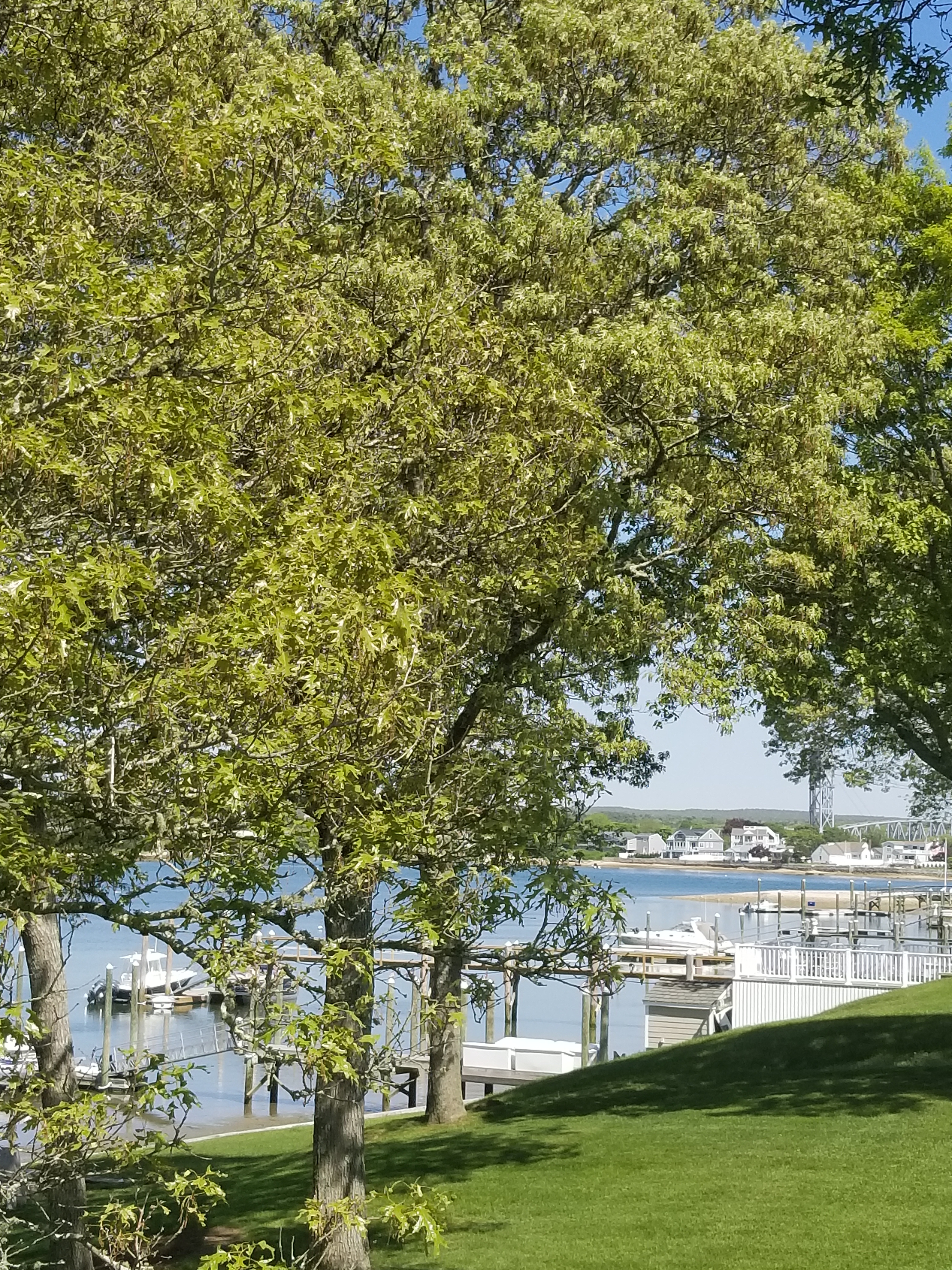
So many things come to light when Sylvia sits out in the sunshine on the cove.

Erma to the Rescue

Today the full sun isn’t drawing any lines. Sylvia’s feeling everything at once. Erma’s just arrived to help provide the guide lines. Guide lines not guidelines.
There is a thin line that separates laughter and pain, comedy and tragedy, humor and hurt. ~Erma Bombeck
#breathe

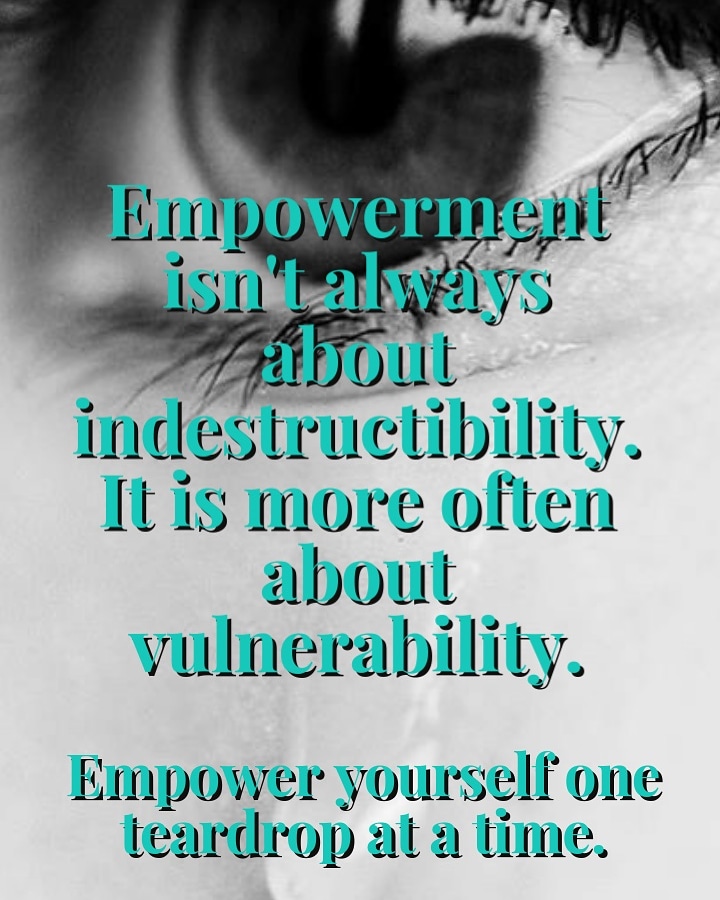
One Teardrop At a Time

Let the tears flow. Tears of survival. Tears of determination.

Erma: I assure you, Sylvia, it’ll pass. It’ll be over soon.

Sylvia: You think so? Promise? Because honestly, Erma, I don’t know if I have anything left. I’m so tired.

Erma: Bullshit, Sylvia. There’s always something left, so grab the Kleenex.